
Intentional Sponsorship, Not Just Mentorship: Mentorship offers guidance; sponsorship opens doors. Throughout my career, I’ve seen the importance of having advocates who actively promote women’s potential. Early on, a senior partner didn’t just advise me — he put my name forward for a high-stakes project that changed the trajectory of my career. That kind of intentional sponsorship is what accelerates leadership readiness.
Despite strides towards equality, women remain underrepresented in leadership and management roles across various sectors. In this series, we would like to discuss the barriers to female advancement in these areas and explore actionable strategies for change. We are speaking with accomplished women leaders, executives, and pioneers who have successfully navigated these challenges to hear their experiences, tactics, and advice, which will inspire and guide the next generation of women toward achieving their full potential in leadership and management roles. As part of this series, we had the pleasure of interviewing Pelicia Hall.
Pelicia Hall is a dynamic leader at ViaPath Technologies, where she serves as a key advocate for innovative solutions in the telecommunications sector. With over a decade of experience in technology and business management, Pelicia has established herself as a trailblazer in driving strategic initiatives that empower organizations and enhance customer experiences. Her passion for promoting diversity and inclusion in the workplace is evident in her commitment to mentoring and developing upcoming female leaders in the industry. Pelicia’s expertise and vision have not only transformed the companies she has worked for but have also inspired her colleagues to pursue excellence and leadership roles. Through her work, she continues to champion the importance of equitable access to opportunities for all, making a significant impact in both her organization and the broader community.
Thank you so much for doing this with us! Before we dig in, our readers would like to get to know you a bit more. Can you tell us a bit about your “backstory”? What led you to this career path?
Inever aspired to a career in corrections, but I have always wanted to be a lawyer since I was a little girl. I was never exposed to lawyers in my family, but I loved the portrayal of Claire Huxtable on the Cosby Show. She was beautiful, sharp, a partner in the firm, and she had it all: a successful career and a family. She was inspiring, albeit a TV character, but she was the best representation of a black female in the law that I saw.
Everything that I did was preparing for my journey into the practice of law, and I stayed steadfast with the support of my family, who always provided a solid foundation for discipline, excellence, and independence. I only wavered once when I lost my father to cancer when I was a sophomore in college. It was at that point that some of the fire and determination that I had was extinguished when I lost him, but my mother quickly reminded me that I owed it to myself and to my dad’s legacy to finish what I started, and I did, and have never looked back.
Can you share the most interesting story that happened to you since you began your career?
“One of the most impactful and memorable moments in my career was being appointed Commissioner of Corrections for the State of Mississippi by Governor Phil Bryant in 2017. This appointment was historic — not only was I the first woman to lead the state’s correctional system, but I also stepped into a role that carried immense responsibility and opportunity for transformation.
Leading such a complex and challenging system was one of the most demanding roles I’ve ever held, but also one of the most rewarding. I had the privilege of driving meaningful change and advocating for the rehabilitation and dignity of incarcerated individuals. What made this experience even more powerful was the makeup of the workforce — 65% of the staff were women. For many of them, seeing a woman in the highest leadership position was a source of inspiration and affirmation.
I received countless letters, emails, and calls from staff expressing their gratitude and pride. It wasn’t just about me — it was about what my appointment represented: possibility, progress, and visibility. It gave me the chance to shine a light on the incredible work being done by dedicated professionals who had long gone unrecognized. That experience continues to shape how I lead — with purpose, empathy, and a commitment to creating space for others to thrive.”
Can you share a pivotal moment in your career that significantly influenced your path to leadership?
It has always been natural for me to serve in a leadership role. My mother and grandmother were both educators, and my grandmother also served as a principal. I constantly saw leadership from two powerful women, and they encouraged us to be involved not just academically but also athletically — I played softball and was the pitcher throughout my entire playing career, up to college — and socially. I was active in the Beta Club and Honors Society, attended a leadership program at the University of Maryland during high school, was a Girl Scout, served as secretary of my Sunday School at my home church, and participated in many other activities that helped me understand what leadership is all about. My experiences growing up were also key in building my self-confidence for a fast-paced career in law.
None of us can achieve success without some help along the way. Is there a particular person you are grateful to who helped you get to where you are today? Can you share a story about that?
Without a doubt, my parents and grandparents laid the foundation for everything. Mediocrity was never acceptable; I couldn’t settle for it, and kindness and gratitude were absolute musts. My mom is my rock and remains my guiding force on both good and bad days, while the spirits of my dad and grandmother still strongly influence me.
Throughout my career, I’ve been fortunate to meet many genuine people who have provided me with numerous opportunities.
Attorney & Pastor James Henley gave me my first opportunity to serve as a law clerk while I was in law school, and I learned a great deal under his guidance. He taught me how to prepare a case from start to finish, but also how to show compassion to clients on their worst days — the days they walk into your office needing legal help.
Judge Tomie Green offered me my first clerkship with the Court after a day-long interview, during which she extended the offer after spending a day observing her court’s proceedings. Those two years were incredible, and she taught me a great deal about practice. From my time with Judge Green, I realized I wanted to practice civil and corporate law, but I also knew I didn’t want to practice criminal law; I lack the stomach for it. Judge Green was not only my boss but also my mentor, and she remains so to this day.
I will always be grateful to both Pastor Henley and Judge Green, whom I consider dear friends. I must also mention others like Judge Carlton Reeves (US District Court for the Southern District of MS), James Holland, Tommy Page & Jamie Travis (partners at Page, Kruger & Holland), and Marshall Fisher (Retired DEA and Public Safety Commissioner), all of whom played significant roles in my ongoing success in law and my transition to public service.
Is there a particular book that made a significant impact on you? Can you share a story or explain why it resonated with you so much?
I’ll share a more recent one, since I’ve entered the 50-and-over club with “Let Them” by Mel Robbins. In a world where we strive to change people into what we want them to be, do, or live up to others’ expectations, this resonated with me deeply. The idea of stopping giving away your power or letting your happiness and contentment depend on others’ actions is so liberating and freeing. This is coming from someone whose personality assessment indicates that they are a “people pleaser.” Mel Robbins, where have you been all my life?
Do you have a favorite “Life Lesson Quote”? Do you have a story about how that was relevant in your life or your work?
One of my favorite life lesson quotes is: ‘Don’t let fear stand in the way of an opportunity.’ That mindset has shaped the trajectory of my entire career.
Time and again, I’ve been approached with opportunities that weren’t on my radar — roles that didn’t align perfectly with my legal background or my planned career path. From serving as Special Assistant Attorney General, to Lead Counsel for the Bureau of Narcotics, to Chief of Staff at the Department of Corrections, and ultimately Commissioner of Corrections — each role came unexpectedly. And each time, my initial instinct was to say, “I’m good where I am.” But I always paused and asked myself: What’s the worst that could happen by just taking the meeting? So, I did — and every time, I was offered the position.
What I’ve learned is that fear often masks opportunity. By choosing not to let fear dictate my decisions, I’ve been able to grow, lead, and make a meaningful impact in spaces I never imagined. Even when the roles weren’t a perfect fit on paper, I knew how to build strong teams, empower others, and drive the mission forward. That’s what leadership is about — creating space for others to thrive while staying open to the unexpected.
How have you used your success to make the world a better place?
I work every day to become a better person and to be the best version of myself. One of my favorite scriptures is Luke 12:48: “From everyone who has been given much, much will be demanded; and from the one who has been entrusted with much, much more will be asked.” I genuinely believe that for every door that has been opened for me or for every opportunity I have received, I have a responsibility to open a door for another deserving young woman who might not otherwise have a chance. I often say that when God sends the elevator up for me, it is my duty to send it down for someone else.
Ok, thank you for that. Let’s now jump to the primary focus of our interview. According to this report, only about 31.7% of top executive positions across industries are held by women. This reflects significant historical progress, but it also indicates that further work is still needed to empower women. In your opinion and experience, what is currently holding back women from leadership and management?
As someone who has personally broken glass ceilings and now holds a rewarding role as an Executive Vice President & Chief Regulatory Officer, I’ve witnessed both progress and the ongoing barriers women encounter in reaching executive leadership. While we’ve achieved significant advancements, systemic issues still exist.
One major challenge is the lack of access to influential networks and sponsorship; women are often mentored but not sponsored, which reduces their visibility and opportunities for advancement. There’s also the problem of unconscious bias, which can influence perceptions of leadership potential and affect promotion decisions. Women are often judged on performance, whereas men are assessed on potential. This difference has historically slowed career growth despite equal or greater qualifications. I have personally experienced this.
Additionally, many organizations (whether public or private) continue to struggle in building cultures that support work-life balance, which disproportionately impacts women, especially those managing caregiving responsibilities.
This may seem intuitive to you, but it will be helpful to spell it out. Can you share a few reasons why more women should aspire to leadership and management roles?
Get Authority Magazine Editorial Staff’s stories in your inbox
Join Medium for free to get updates from this writer.Subscribe
I’m deeply committed to advocating for women in leadership — not just because of my journey, but because I believe that diverse leadership produces better outcomes. In my current role as President of the Association of Women Executives in Corrections, I have observed that many women are viewed in the workplace as placeholders rather than change agents, fulfilling a quota rather than representing meaningful progress. We must continue to push for structural reforms, including fair succession planning, inclusive leadership development, and accountability at the highest levels. Empowering women isn’t just the right thing to do — it’s a strategic necessity.
Dr. Martin Luther King, Jr. said, “Our lives begin to end the day we become silent about things that matter.” I carry this with me and have had it posted in every office I occupied throughout my career.
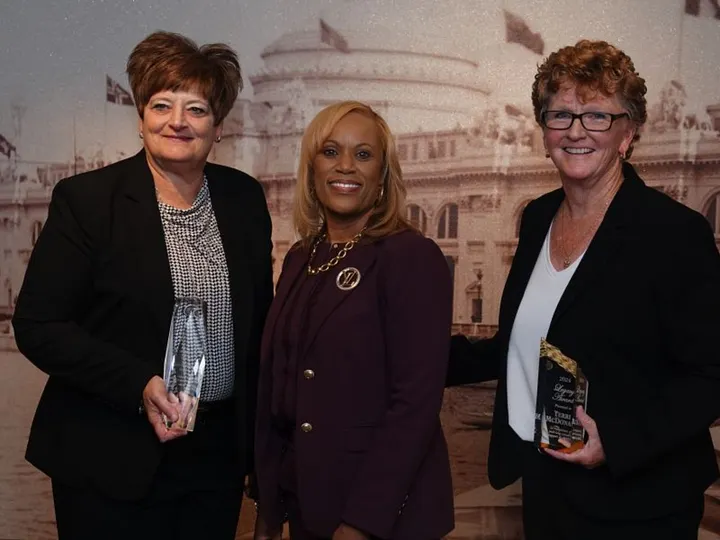
Can you please share “5 Things We Need to Increase Women’s Engagement in Leadership and Management?”
1. Intentional Sponsorship, Not Just Mentorship: Mentorship offers guidance; sponsorship opens doors.
Throughout my career, I’ve seen the importance of having advocates who actively promote women’s potential. Early on, a senior partner didn’t just advise me — he put my name forward for a high-stakes project that changed the trajectory of my career. That kind of intentional sponsorship is what accelerates leadership readiness.
2. Normalize Authentic Leadership Styles: Women shouldn’t have to lead like someone else to be taken seriously.
I’ve worked in male-dominated fields my entire career, but I never lost sight of who I am. I’ve led with empathy, clarity, and conviction — and I’ve seen how authenticity builds trust and drives results. When organizations adopt diverse leadership styles, they create an environment that allows women to thrive without compromising their identity.
3. Build Inclusive Leadership Pipelines: Leadership development must be designed with equity in mind.
4. Create Safe and Supportive Networks: Women need spaces where they can be candid, supported, and empowered.
I’ve seen the power of peer networks — circles where women share strategies, challenges, and encouragement. At AWEC, where I serve as President, we launched a women’s leadership forum that has become a catalyst for collaboration, confidence-building, and cross-functional growth.
5. Hold Leadership Accountable for Equity: Progress doesn’t happen without accountability.
I’ve worked with executive teams in my former executive roles to embed equity metrics into performance reviews and succession planning. When leadership is held accountable for representation and inclusion, change becomes a priority — not a possibility.
In your opinion, what systemic changes are needed to facilitate more equitable access for women to leadership roles?
Systemic change starts with recognizing that talent is evenly spread, but opportunity is not. To create fairer access for women in leadership roles, organizations must go beyond superficial diversity efforts and embed equity into their core systems. So, what does that mean? It means rethinking how we identify potential, evaluate performance, and design leadership pipelines.
One crucial shift is adopting transparent and accountable succession planning. Too often, leadership roles are filled through informal networks or subjective assessments, which can unintentionally (or intentionally in some cases) exclude women. We need data-driven methods that ensure women are considered, sponsored, and supported at every stage of their careers.
Another vital area is fostering flexibility and an inclusive culture. Leadership shouldn’t require sacrificing personal identity or well-being. When organizations normalize flexible work, value diverse leadership styles, and actively challenge bias, they create an environment that allows women to lead authentically.
Finally, we must invest in mentorship and sponsorship — not just programs, but building relationships that open doors and boost confidence. I’ve benefited from leaders who saw my potential and gave me room to grow. Now, I’m dedicated to doing the same for others. Systemic change involves developing structures that not only allow women to lead but also empower them to succeed.
What strategies have you found most effective in mentoring and supporting other women to pursue leadership positions?
One of the most effective strategies I’ve discovered for mentoring and supporting women into leadership is being intentional about visibility and voice. It’s not enough to offer encouragement — we must actively create space for women to be seen, heard, and considered for opportunities they might not even realize they’re prepared for. I make it a priority to advocate for women in rooms they aren’t in yet and to connect them with people and platforms that can boost their growth. Ultimately, it’s about being present, authentic, and dedicated to lifting others as you advance. That’s how we build not just leaders but legacies.
How would you advise a woman leader about how to navigate the challenges of being a woman in a leadership role within a male-dominated industry?
Having spent my entire career in male-dominated fields, I understand the unique challenges women face in leadership; however, I also know the power of staying true to oneself. My advice to any woman stepping into a leadership role is this: don’t compromise your identity to fit into a mold that wasn’t built for you. Your perspective, your voice, and your leadership style are assets, not liabilities.
You will likely encounter moments where you’re underestimated, overlooked, or expected to lead differently simply because you’re a woman. In those moments, lean into your purpose. Know your value, speak with clarity, and lead with conviction. Authority doesn’t have to be loud — it can be grounded, strategic, and empathetic.
Build a strong support system — mentors, peers, and allies who affirm your leadership and challenge you to grow. And when you have the opportunity, be that support for someone else. Representation matters, and every time you show up authentically, you make space for others to do the same.
How do you balance the demand for authoritative leadership with the stereotypical expectations of female behavior in professional settings?
This is a tough one. One word, “AUTHENTICITY “. Balancing authoritative leadership with stereotypical expectations of female behavior is a challenge I’ve had to navigate throughout my career. There’s often an unspoken pressure for women to be agreeable, nurturing, and deferential — traits that can be unfairly contrasted with the decisiveness and assertiveness expected of leaders. But I’ve learned that authenticity is not just a personal value — it’s a leadership strength, at least for me.
I don’t believe women should have to choose between being respected and being themselves. For me, leading with clarity, conviction, and empathy has been key. I’ve found that when you’re grounded in your values and consistent in your approach, people respond to your leadership — not your gender. That said, it takes courage to challenge norms and to show up fully, especially in environments where female leadership is still underrepresented.
It is also imperative to redefine what constitutes authoritative leadership. It doesn’t have to be loud or rigid — it can be inclusive, strategic, and deeply human. By embracing our whole selves, we not only lead more effectively, but we also pave the way for others to do the same. That’s why I’m passionate about mentoring and advocating for women — because representation matters, and authenticity should never be the cost of success.”
You are a person of significant influence. If you could inspire a movement that would bring the most amount of good for the most significant number of people, what would that be? You never know what your idea can trigger.
If I could inspire a movement, it would be called Access Forward or Lead Without Limitations. It would be rooted in the belief that opportunity should not be a privilege — it should be a promise. This movement would focus on dismantling systemic barriers and building intentional pathways for women, people of color, and other underrepresented groups to rise into leadership and influence.
Access Forward/Lead Without Limitations would challenge organizations to go beyond performative inclusion and commit to real, measurable change — through equitable succession planning, inclusive leadership development, and cultures that value authenticity over conformity.
I’ve seen the power of what happens when someone is given a chance to lead as their whole self. That’s what I want to multiply. Because when we expand access, we expand possibility — and that ripple effect can transform not just careers, but entire communities.
How can our readers further follow your work online?
I do not live my life out loud as many people do in this age of social media; however, I am working on being comfortable increasing my social media presence to elevate the voice of those underrepresented, whether it be through my role here at ViaPath, my role as AWEC President or my role as the President of the Alcorn State University National Alumni Association.
Thank you for these fantastic insights. We greatly appreciate the time you spent on this.